In today’s automotive industry, partnerships are not just common – they are essential. From shared technology to global expansion, manufacturers increasingly rely on joining forces, a trend that has only intensified with the push towards electrification.
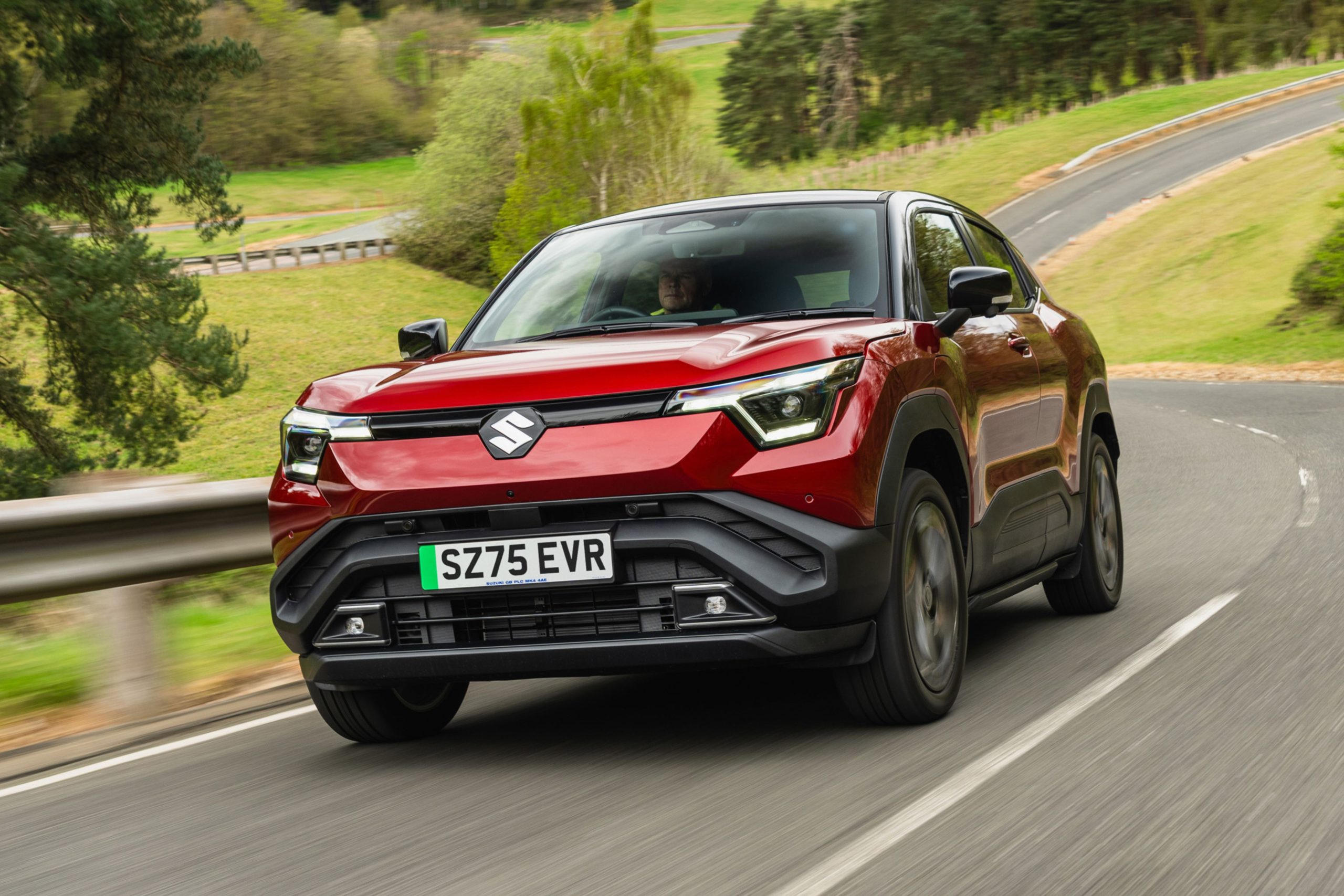
Suzuki and Toyota are a prime example of this. It goes without saying that designing, engineering and building EVs is not cheap, so a problem shared is a problem halved. In Suzuki’s case, this collaboration has – at long last – borne fruit. Badged ‘e Vitara’, its underlying components are supplied by Toyota – the same that can be found beneath that company’s Urban Cruiser.
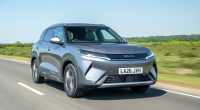
The e Vitara’s proportions, and its overall look, are unlikely to appeal to everyone. Suzuki claims to have given the car a “truly authentic high tech and adventure” design, with this characterised by flared bumpers and muscular shoulder lines, deep C-pillars and 185mm of ground clearance. To our eyes, the front has hints of the Citroën C4, while the rear cries out MG 4 due to a full-width LED light bar that flows into V-shaped taillights. There are 10 body colours available: five single-tone finishes costing £650 and five dual-tone options (£950), the latter reserved for top-spec ‘Ultra’ models that bring added premium touches such as larger 19-inch alloy wheels, wireless phone charging, and adaptive LED lights.
‘Motion’ is the entry point to the two-car line-up and is a reasonably well-equipped base model, capable of returning 213 miles from its 49kWh battery. Mounted on the front axle, power totals 142bhp. Front-wheel-drive ‘Ultra’ models (172bhp) have a quoted WLTP range of 264 miles, while the optional four-wheel-drive system, complete with ‘AllGrip’ badging, achieves around 245 miles from a larger 61kWh battery. The addition of a rear axle-mounted e-motor increases the total output to 181bhp. All three versions boast the exact same 93mph top speed, with the 0–62mph sprint ranging from 9.6 to 7.4 seconds.
Those are decent numbers and more than sufficient for everyday driving. The e Vitara feels brisk and does not run out of puff as speeds rise. A selection of driving modes is available, with two-wheel-drive versions offering Eco and Normal, Sport and Snow, while ‘AllGrip’ models add a Trail mode in place of Snow. In practice, the main difference between them is throttle response. Those after genuine off-road ability will be pleased to note that ‘Trail’ provides credible go-anywhere capability as it constantly monitors slip or wheelspin and subsequently distributes power between each corner as – and when – it is needed.
On the road, first impressions are encouraging. The steering is nicely weighted, the high driving position ensures a commanding view of the road ahead, and both the accelerator and brakes respond progressively. Ride quality, however, is a bit of a mixed bag. The soft suspension setup might suit smoother roads, but on a typical British B-road the e Vitara feels overly bouncy and lacks the body control of key rivals through corners. Even on the motorway it fails to fully settle, with noticeable wind noise at speed. Then there is the regenerative braking; while three levels are offered and can be activated via a button on the centre touchscreen, adjusting between low, medium and high requires a deep dive.
The bulk the in-car functions are routed through the main touchscreen. Physical controls are limited to a small bank of six climate toggles covering fan speed, temperature, air conditioning, recirculation and screen heating and are housed between the central air vents. A volume knob sits alongside them, while four additional buttons – including hill descent – flanking the drive selector on the piano black lower console.
Equally unappealing is the time required to charge. On a DC rapid charger, expect to set aside around 45 minutes to go from 10 to 80 per cent, reflecting the e Vitara’s maximum charging speed of 70kW. Many rivals can achieve the same in roughly half the time. This is largely because Suzuki prioritises battery longevity over faster charging capability, despite the system being capable of more. On a typical 7kW home wallbox, a full charge takes around six and a half hours for the smaller battery, and nine hours for the larger one.
Entry-level models get fabric seats, while higher trims add part-leather in a clear attempt by Suzuki to move things upmarket. Unfortunately, bland hues dominate, and there is no shortage of scratchy plastics used in the construction of the dashboard and door cards. Both ‘Motion’ and ‘Ultra’ get a clear, customisable and seamlessly built-in 10.25-inch digital instrument display and a 10.1-inch infotainment screen that feels dated and is less than responsive to inputs, particularly the Advanced Driver Assistance Systems.
Move to the second row of seats and a flat floor boosts leg room, with sliding of 40/20/40 chairs an added nice bonus. It does come at the expense of boot space which averages 240-litres if they are locked in the normal position and grows to 308-litres if these are fully forwards. Fold all the seats down and you are left with 562-litres.