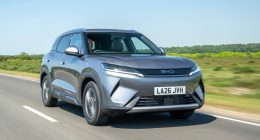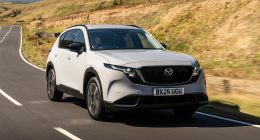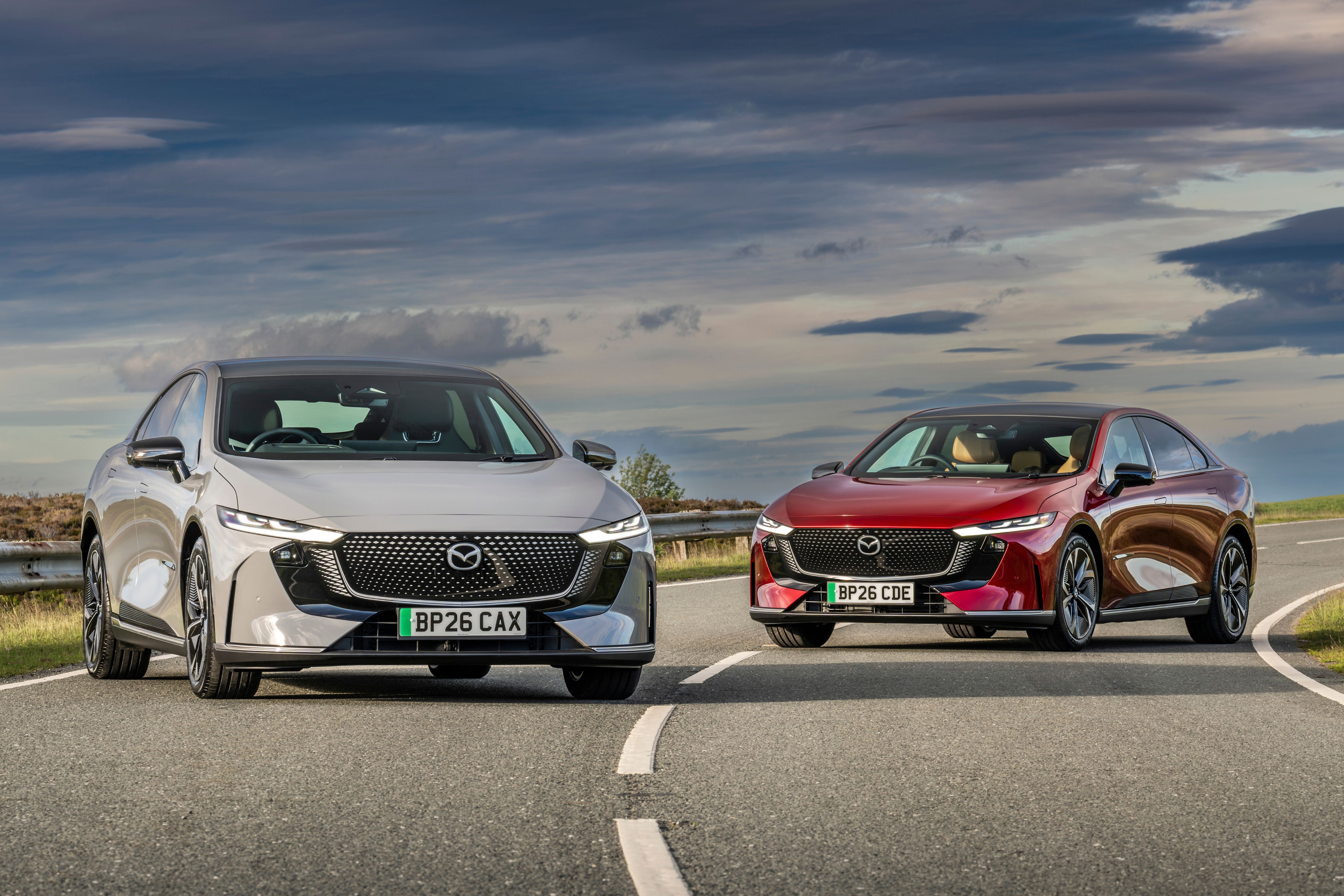
The Mazda 6 has long been a familiar sight on our roads, offering an appealing blend of style, comfort and driver appeal. Now, the name returns in an entirely new form, with the all-new Mazda 6e bringing fully electric power to the Japanese manufacturer’s executive car line-up. It represents a significant step forward for its electric ambitions, entering an increasingly competitive market alongside the Tesla Model 3 and BYD’s Seal.
There is an important distinction between the Mazda badge on the bonnet and the origins of the technology beneath the skin. The 6e is the product of a long-standing partnership between Mazda and Chinese manufacturer Changan Automobile, with the car developed through their joint venture, Changan Mazda, and built in China. Changan contributes much of the underlying electric-vehicle architecture and smart-cabin technology, and Mazda has led the design, craftsmanship and tuning to ensure it suits European tastes.
The first thing that strikes you is just how well resolved its exterior design is. There is an unmistakable Mazda character to the car, with the manufacturer’s signature Kodo ‘Soul of Motion’ design philosophy blending with a swooping, four-door fastback silhouette. Its sleek shape, frameless doors, and crease-free bodywork give it genuine road presence.
There are some unnecessary styling flourishes, such as the black badging positioned low down on the driver and front passenger doors, fussy silver trim around the base of the c-pillars, and a rather chunky, horizontal lightbar that embeds four distinct cylindrical elements as a visual nod honouring Mazda sports cars of old.Still, there are also thoughtful details, from the illuminated front grille that adds a contemporary flourish to the integrated rear spoiler that rises into position at the touch of a button – or automatically when in ‘Sport’ mode once you hit 56mph.
Even the indicators have been given special attention. Their pulsing illumination has been engineered to mimic the rhythm of a human heartbeat, say Mazda – a small but charming detail that demonstrates the time and thought that has invested in the car’s presentation. On the subject of lighting, the element surrounding the front grille area doubles as an active indicator, showing the vehicle’s charging status when it is plugged in.
Step inside and the impression is equally positive. Build quality is simply exemplary, with materials that look and feel considerably more upmarket than you might expect. The trim finishes and accents, stitching and overall presentation combine to create an environment that feels carefully assembled and genuinely premium. It gives the Germans a run for their money in no short order.
There is a reassuring sense of solidity to the cabin, while the clean dashboard design and uncluttered layout contribute to the sense of calm. The 14.6-inch central touchscreen dominates proceedings and is complemented by a 10.2-inch digital instrument binnacle and a head-up display. Unfortunately, Mazda’s enthusiasm for minimalism has been taken a step too far because there are no conventional switches or buttons, meaning almost every conceivable operation is channelled through the central touchscreen.
Want to adjust the wing mirrors? Open the screen. Need to change the wiper speed? That requires a visit to the display, too. This also goes for the ventilation, active safety systems, and drive modes. On the upside, the screen is bright and impressive, but frequently used functions should be accessible without having to navigate menus, particularly when driving.
The 6e UK line-up is refreshingly straightforward, comprising two trim levels: ‘Takumi’ as tested here and ‘Takumi Plus’. Prices start at £38,995 on the road rising to £39,995. Both versions ride on 19-inch alloy wheels and come equipped with a heat pump, dual-zone climate control, electronically adjustable front seats, a head-up display and a powered tailgate. The ‘Takumi Plus’ adds Nappa leather upholstery, a panoramic glass roof and titanium detailing for an extra £1,000 – money well spent, we say.
It is a competitive proposition, particularly given the equipment included as standard: the entry-level ‘Takumi’ is unlikely to leave future buyers feeling short-changed, while the Plus offers a little extra luxury without pushing the asking price significantly higher.
On the road, the 6e makes a similarly strong case for itself, albeit with a slightly different emphasis from some of the driver-focused models for which Mazda is known. Power in this instance comes from a rear-mounted electric motor that produces 255bhp, fed by a 78kWh battery. The claimed 0-62mph time is 7.6 seconds, providing more than enough oomph for everyday driving, confident overtaking and effortless progress. However, outright performance is not the 6e’s defining characteristic. Instead, its real strength lies in refinement.
At cruising speeds, it is serene and settled, with minimal road and wind noise contributing to a remarkably hushed cabin. The power delivery is smooth and predictable, making it easy to maintain a relaxed pace. It feels particularly well suited to covering long distances, where its quiet demeanour and comfortable surroundings come into their own. Push harder on a twisting road, however, and the picture becomes a little more complicated. The steering lacks the feedback and precision that have defined some of Mazda’s finest models, while the suspension can feel unsettled over more challenging surfaces. Nevertheless, the 6e remains competent, even if it lacks some of the trademark driver appeal traditionally associated with the Japanese brand.
Other important considerations in this class are range and charging, and the 6e makes a convincing case for itself. Its official range extends to 348-miles, while DC rapid charging is supported at rates of up to 195kW. Mazda quotes a 10-80 per cent charging time of around 24 minutes under suitable conditions – figures that make this car a credible proposition for drivers considering the switch to electric motoring. Actual range will depend on driving conditions, of course, as well as temperature and speed, but the combination of a substantial battery and rapid-charging capability should make everyday use straightforward and ownership appealing.
Practicality is another consideration as the spacious cabin provides generous rear legroom, while the fastback tailgate makes loading easier than in a conventional saloon. The relatively shallow boot floor and high loading lip are less impressive, although the additional front ‘Frunk’ storage compartment provides a useful place for charging cables and smaller items.